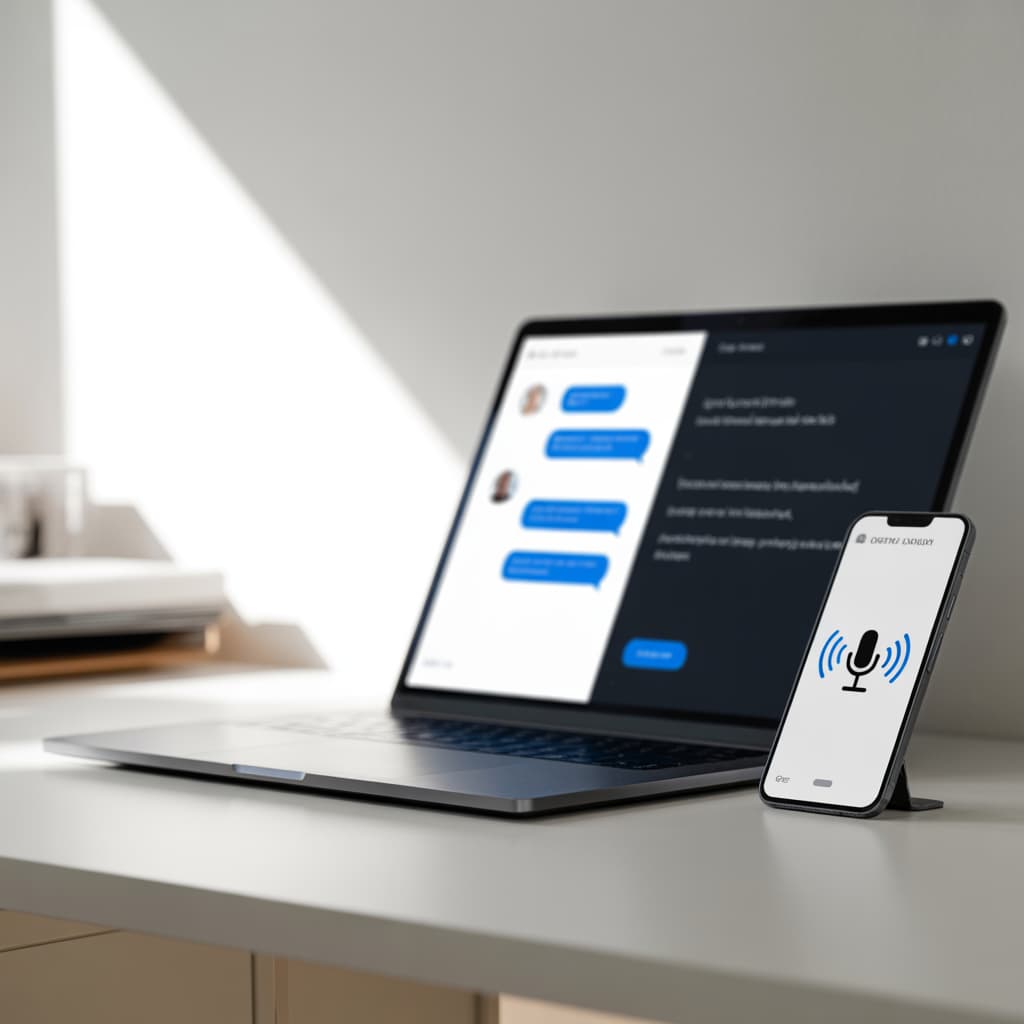
Every CX leader faces the same question: voice or chat? The honest answer is "it depends" but that's not helpful. So we analyzed 5 million customer interactions across 127 companies to find real patterns. Here's what the data says.
The High-Level Finding
Neither channel is universally better. But specific use cases strongly favor one over the other:
When Voice Wins (Decisively)
1. Emotional or Sensitive Situations
Billing disputes, complaints, cancellations, anything involving frustration. Voice achieved 23% higher satisfaction and 31% better retention for these scenarios.
Why: Humans need to feel heard. Voice conveys empathy that text cannot match.
2. Complex Problem-Solving
Technical troubleshooting, multi-step processes, situations requiring back-and-forth clarification. Voice resolved these 40% faster than chat.
Why: Conversation is faster than typing. Clarifying questions happen in real-time.
3. High-Value Transactions
Large purchases, policy changes, account modifications. Voice conversion rates were 2.3x higher than chat for transactions over $500.
Why: Trust. Customers want human-like interaction for important decisions.
4. Urgent Situations
Service outages, time-sensitive issues, emergencies. Voice achieved 67% faster time-to-resolution for urgent matters.
Why: Immediacy. Voice is synchronous; chat often has gaps.
When Chat Wins (Decisively)
1. Simple Transactions
Order status, password resets, balance inquiries. Chat resolved these 34% faster and customers actually preferred it.
Why: No need for pleasantries. Get in, get answer, get out.
2. Information That Requires Copying
Tracking numbers, account numbers, URLs, codes. Chat avoids the "let me read that back to you" problem.
Why: Text is persistent. No need to write things down.
3. Multitasking Customers
Customers who are at work, in meetings, or in public places. Chat was preferred 4:1 for these contexts.
Why: Privacy and convenience. Can't always talk out loud.
4. Asynchronous Resolution
Issues that require research, escalation, or follow-up. Chat threads maintain context over hours or days.
Why: Continuity. Customer can return to the conversation without re-explaining.
"The mistake most companies make is forcing channel choice based on cost, not customer need. The cheapest interaction is one that resolves the issue regardless of channel."
Dr. Nathan Cole Director of Research
The Hybrid Approach: Best of Both
The highest-performing companies in our study didn't choose one channel they intelligently routed to the right channel based on:
- Issue type: Complex/emotional → voice; simple/transactional → chat
- Customer preference: Let them choose, but default smartly
- Context: Business hours, mobile vs. desktop, customer history
- Availability: If voice wait is 10 min but chat is instant, offer chat first
Channel Strategy Checklist:
- Map your top 10 contact reasons to optimal channel
- Implement intelligent routing based on issue type
- Allow channel switching mid-interaction
- Measure satisfaction by channel AND issue type
- Continuously optimize based on data, not assumptions
Want the Full Research Report?
Download our complete 47-page analysis with industry-specific breakdowns.
Download Research Report →