Deploying voice AI for one use case is a project. Scaling it across an enterprise is a transformation. I've watched companies struggle and succeed at this challenge. The difference almost always comes down to organizational structure.
This guide shares the Center of Excellence (CoE) model that's working for the most successful enterprise deployments.
The Voice AI CoE: Core Functions
Function 1: Strategy & Roadmap
- Maintain enterprise-wide voice AI roadmap
- Prioritize use cases by business impact and feasibility
- Coordinate across business units to avoid duplication
- Track industry trends and emerging capabilities
Function 2: Standards & Quality
- Define voice AI experience standards (tone, personality, flows)
- Establish quality benchmarks and measurement
- Create reusable components and templates
- Ensure consistency across customer touchpoints
Function 3: Enablement & Support
- Train business units on voice AI capabilities
- Provide implementation support and consulting
- Maintain knowledge base and best practices
- Run community of practice for practitioners
Function 4: Governance & Risk
- Ensure compliance with regulations (privacy, accessibility, etc.)
- Manage vendor relationships and contracts
- Oversee data handling and security
- Monitor for bias and ethical concerns
CoE Organizational Models
Model A: Centralized
CoE owns all voice AI development. Business units request through CoE.
Pros: Maximum consistency, efficiency, control.
Cons: Can become bottleneck. May be seen as ivory tower.
Model B: Federated
CoE sets standards. Business units implement with CoE guidance.
Pros: Scales better. Business units have ownership.
Cons: Harder to enforce consistency. Requires mature BU capabilities.
Model C: Hybrid
CoE owns core platform and high-visibility deployments. BUs own routine implementations.
Pros: Balances control and scale.
Cons: Requires clear scope definition. Can create gray areas.
Building Your CoE Team
Core Roles:
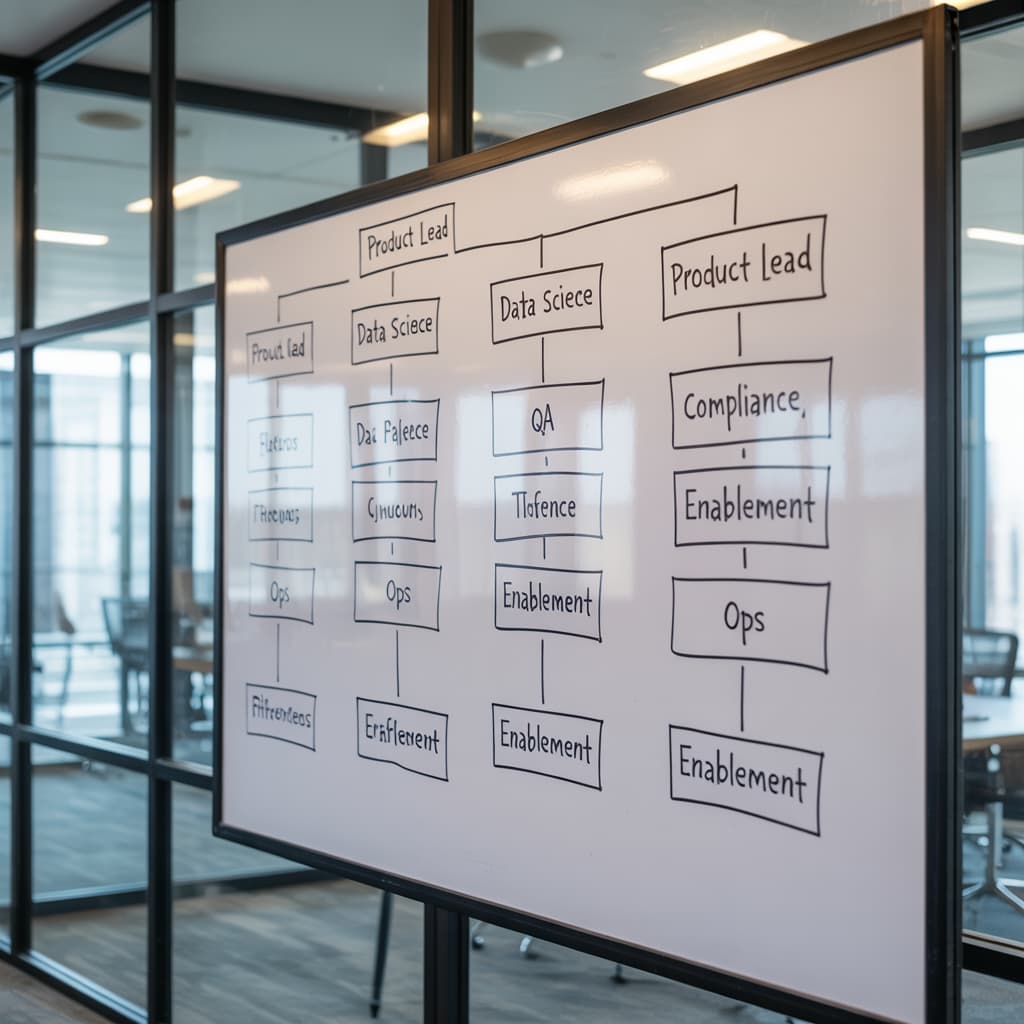
- CoE Lead: Strategy, stakeholder management, roadmap
- Conversation Designers: Dialog flows, personality, content
- AI Engineers: Model training, integration, optimization
- Data Analysts: Metrics, insights, continuous improvement
- Compliance/Risk: Governance, regulatory, ethics
Scaling the Team
1-3 deployments: 3-5 people (Lead + 2-4 practitioners)
4-10 deployments: 8-12 people (add specialists, BU liaisons)
10+ deployments: 15-25 people (full federated model with BU embedded resources)
"Our CoE started as two people running a pilot. Three years later, it's a 20-person team that's deployed voice AI to every customer-facing division. The structure evolved with our ambitions."
VP of Digital Experience Fortune 100 Retailer
Governance Framework
Steering Committee
Executive sponsors from IT, Operations, CX, Legal. Meets monthly. Approves roadmap and major investments.
Working Groups
Cross-functional teams for specific initiatives. Technical, compliance, change management.
Review Boards
Formal approval gates for new deployments. Architecture review, security review, compliance review.
Building Your Voice AI CoE?
We've helped dozens of enterprises structure their AI organizations. Let's discuss your situation.
Schedule Strategy Session →